
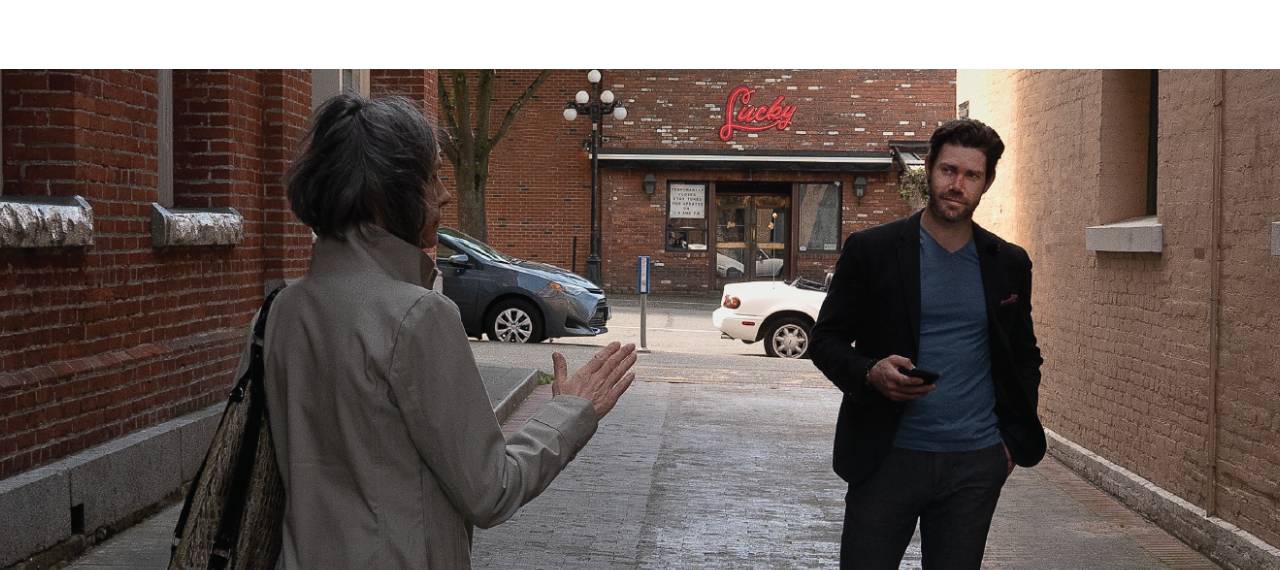
KEEP YOUR DISTANCE?
In these times of uncertainty, it’s more important than ever to tune in to our gut instinct
This pandemic forces us to make tough decisions every day about returning to work, visiting friends and family and in the near future, patronizing restaurants, gyms, hair salons, and other places where safe social distancing is not guaranteed.
After several weeks of isolation and listening to the news, it’s tempting to make a purely emotional decision about whether to continue strict isolation or not.
But to make a wise decision, we need to balance our emotions with logic and tune into our gut instinct.
A gut instinct is an immediate emotional reaction to a situation, without any concrete way of knowing in the moment if you are correct.
It is closely related to intuition—the ability to understand something immediately, without the need for conscious reasoning. It’s easy to confuse our emotions with gut instinct.
Psychologist David Myers theorizes that gut instinct comes from the unconscious right brain. He believes the right brain is always scanning and reading your surroundings, even when the conscious brain isn’t paying attention.
Your right brain picks up on anything slightly unusual; a prolonged glance between two people, the quick downcast of the eyes, a slight nod of the head, or the nervous gait of an approaching stranger.
When the right brain picks up on a subtle, unusual occurrence, it sends a jolt of dopamine to your brain and gives you a quick burst of hyper alertness. This momentary hyper-alertness is our gut instinct. The instant “knowing” what it means is the intuition.
An anxious person is often hyper-alert, consciously scanning the environment for warning signs of physical or emotional danger. The conscious brain over-powers the more subtle scanning of the unconscious brain.
Consciously looking for danger can sometimes impede your ability to pick up on unconscious signals or to tell the difference between the two.
So how can we differentiate between anxiety and intuition?
Gut instinct is an immediate reaction to something that just happened. We go to a store and notice there’s a long line up to get inside. Our gut instinct registers this isn’t normal, something is wrong. We may intuitively know it’s related to the Coronavirus. Your gut instinct will signal to you whether it’s safe to wait in the line.
In contrast, anxiety is a chronic condition that isn’t set off by any one thing. Anxiety is rooted in the future, not on what just happened. Anxiety is fueled by “what if.” It picks up momentum as you ruminate on your fears.
It is anxiety, not gut instinct, that makes us want to horde toilet paper. Anxiety leaves you not knowing what to do so you either do something irrational, or you do nothing at all.
For example, an anxious person may fear going for a walk down a quiet street, just in case someone with the virus walked ahead of them, leaving a trail of germs behind.
Another person will go for a walk but senses danger when someone walking directly in his line of path. He intuitively knows what action to take and crosses to the other side of the road.
Anxiety leaves you unable to take action, whereas gut instinct propels you into action.
Another distinction between anxiety and gut instinct is that your gut instinct is always acting in your own best interest. Its purpose is to protect you and help you to make wise decisions. Anxiety on the other hand, is destructive. It works against what is in your own best interest. To put it simply, anxiety destroys, whereas instinct and intuition protect.
Another difference between anxiety and gut instinct is that anxiety can rarely be proven. Your anxious mind may believe we’re all going to run out of food and starve to death, even though there’s no evidence to support this drastic claim.
On the other hand, if you trust your gut instinct, you might feel propelled to stock up on a couple weeks worth of food in case the situation changes dramatically, or in case you become sick.
Calming anxiety and honing your gut instinct and intuition results in better decision making, and as a result, better mental health. While it’s true that sometimes our gut instinct reveals uncomfortable truths, ignoring or suppressing our intuitive knowing is never in our best interest.
The purpose of intuition is to help you solve problems and avoid danger. Calming our anxiety and honing our intuition not only keeps us safe, but those around us as well.
One thing is for sure, this pandemic is ripe with opportunity to practice calming anxiety, verifying our facts, and trusting our gut instinct.
Stay safe and healthy.
Jenny DeReis, MC Psych, CCC